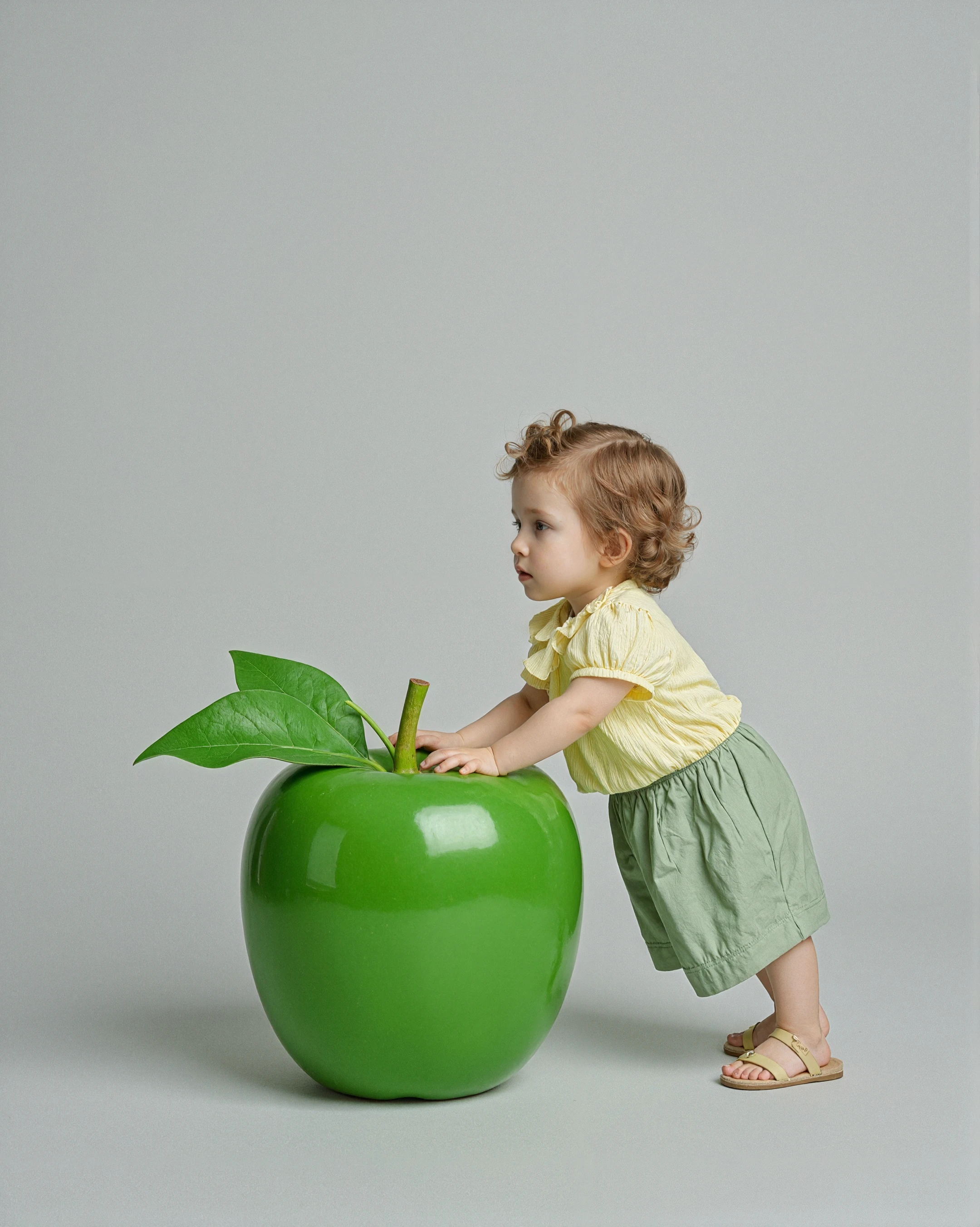
AI for babies' and kids' fashion lets brands produce photorealistic on-model imagery for infant and children's collections without the cost, logistics, and legal weight of shooting real children. A traditional baby shoot can run €500 to €1,200 per child before studio and photographer fees, and is bound by strict child-labor rules; AI-generated child models remove all of it. Here is the full picture, from what a real shoot costs to how brands like Sweetpea & Boy and Blue Seven use AI instead.
We all know that infant shoots are difficult. You have to find an available child who is the right size and energetic, but not too much. You need a parent who is available to come with the child and who accepts the price. In short, a shoot for an infant collection is a massive undertaking. That is the main reason why many brands simply prefer not to shoot their products at all. Quite a shame, isn't it?
1) Traditional Logistic for Kids & Babies Shoots
At the same time, if we look deeper into the logistical constraints, it’s easy to understand why brands feel this way. Let’s list the various steps and logistical hurdles a brand might face during a photoshoot:
- Attention and Focus: You have to manage the child's mood and their ability to focus until you get the perfect shot. For example, a child under the age of three cannot work for more than one hour per day, with a maximum of thirty consecutive minutes.
- Time Windows: For older children (ages 3–12), mandatory schooling hours severely compress the working day, often leaving brands with only a 2 to 4-hour window to shoot an entire collection.
- Complexity: Sessions are described as exhausting and inefficient, requiring a delicate balance between artistic needs and the physical limits of the children.
- Logistics for parents: If you are a working parent, you may need to take a day off to bring your child to the shoot, or pay someone else to do it. Indeed, the logistical burden affects not only the brands but the parents as well!
Let’s take a closer look at the financial side, which is quite an other matter.
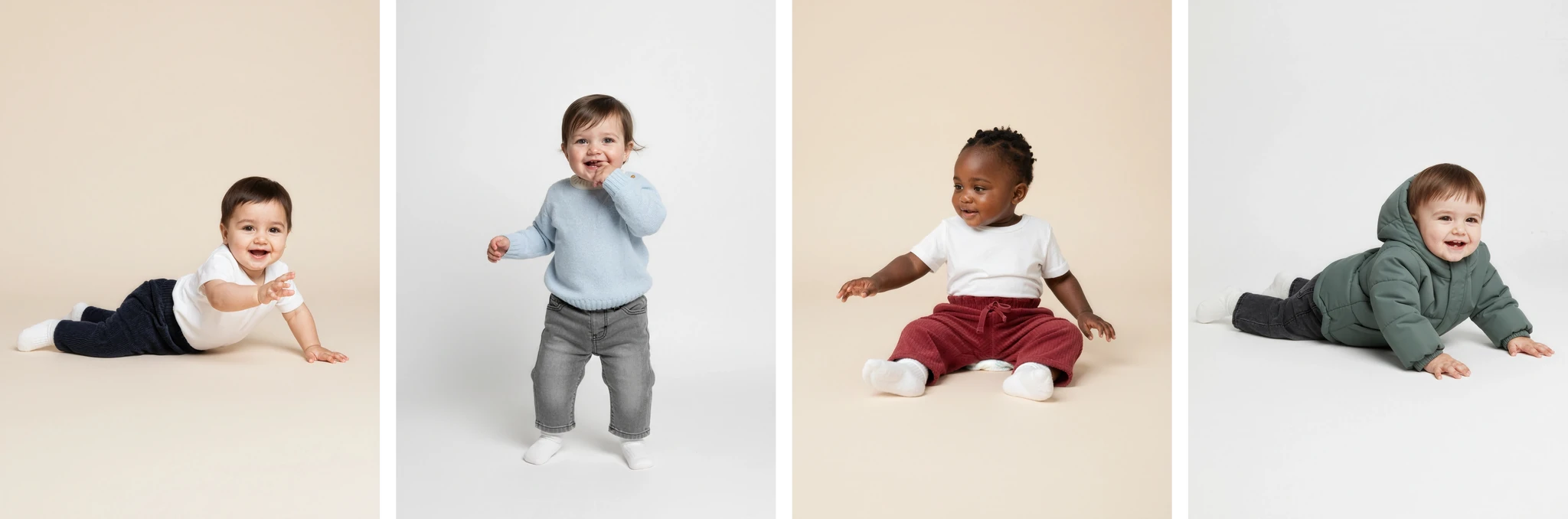
AI generated babies by Veeton.
2) Financial Constraints of Infant Shoots
While logistical hurdles can be exhausting, it is often the financial commitment that tips the scales for many brands. Beyond the visible costs, the “hidden” expenses of a traditional baby photo shoot can be very high. To illustrate this, we will use France as reference.
- Minimum Rates & Booking Fees: The legal minimum in France is approximately €76 gross per hour (approx. $80 USD), but agencies generally enforce a 2-hour minimum payment of roughly €150 (approx. $160 USD), even for shorter sessions.
- Agency Commissions & Taxes: Brands must factor in agency fees, which typically represent about 20% of the gross amount, plus mandatory employer social security contributions (URSSAF, France).
- Usage Rights (Buy-outs): High costs are often found in image rights for web or retail display, which typically range between 50% and 200% of the base salary.
- Mandatory Expenses: Transport and meal costs for both the child and one accompanying parent must be fully reimbursed by the brand.
- Administrative Fees: Obtaining mandatory work permits involves processing fees, typically ranging from €25 to €50 (approx. $27 to $53 USD) per application.
- Total Brand Budget: When totaling these factors, a simple half-day shoot via an agency usually costs a brand between €500 and €1,200 (approx. $530 to $1,275 USD) per child, excluding studio and photographer fees.
To round off our overview of what a child photoshoot entails, let’s look at the final piece of the puzzle: legal obligations.
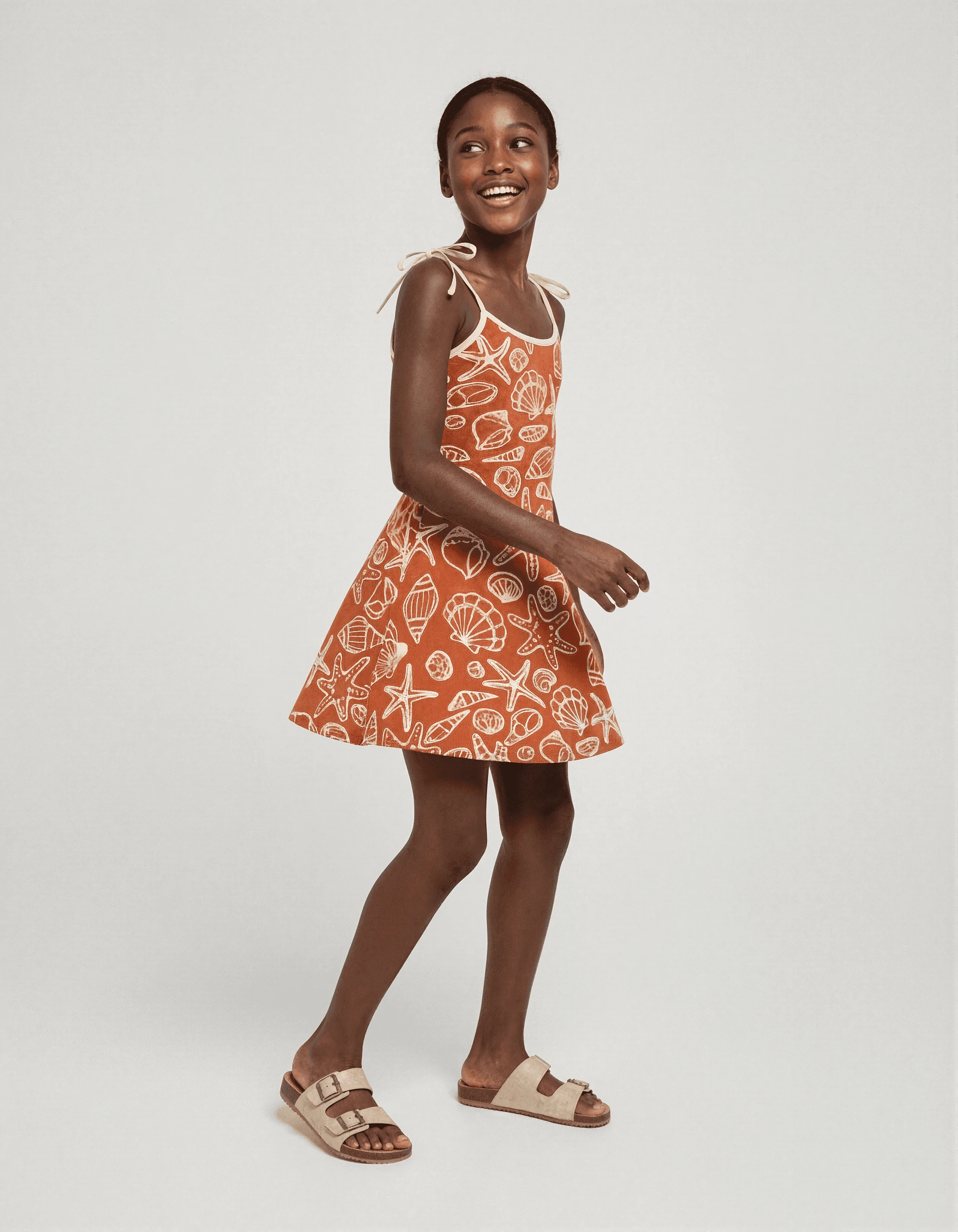
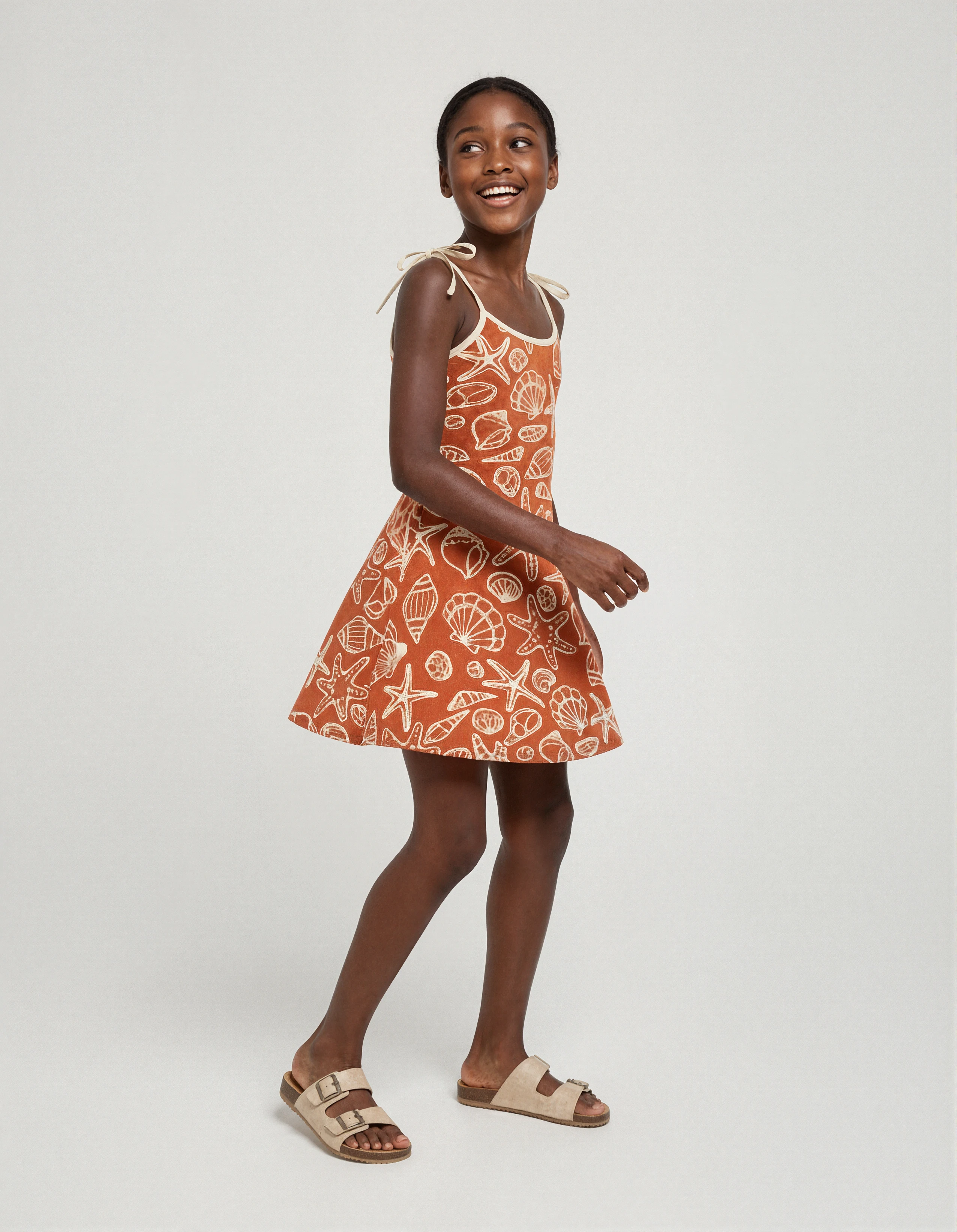
AI generated kid by Veeton.
3) Legal Constraints for Kids & Babies Fashion
The industry is governed by strict legal frameworks designed to protect minors, adding significant administrative weight to every production:
- Labor Laws & Licensing: Stringent child labor laws mandate specialized licensing and strictly regulate the duration of the shoot. In France, these standards are defined by the National Collective Agreement for Models (IDCC 2397, France).
- Earnings Protection: Legislation requires that 80% to 90% of a child’s earnings be frozen at the Caisse des Dépôts until they turn 18 to protect their interests.
- Supervision Requirements: Legal regulations necessitate the presence of mandatory chaperones, child-welfare professionals, or certified "wranglers" on set if a parent is unavailable.
- Regulatory Complexity: Navigating consent, privacy issues, and specific working hour permits makes the traditional process slow and administratively heavy for fashion brands.
Fortunately, alternatives do exist to traditional photoshoot, and we’re going to present the leading option on the market today.
AI generated Babies & AI generated Kids
As previously mentioned, traditional shoots involve various logistical, financial, and legal constraints. However, technology can help offset these challenges. Today, AI can generate hyper-realistic visuals, specifically model imagery. Some companies now specialize in fashion shoot generation, particularly for kidswear. Let’s take a closer look at how it actually works.
1) What AI generated Babies and Kids means
An AI-generated baby or child is a digital model designed to perfectly mimic the physical traits and features of a real infant or child.
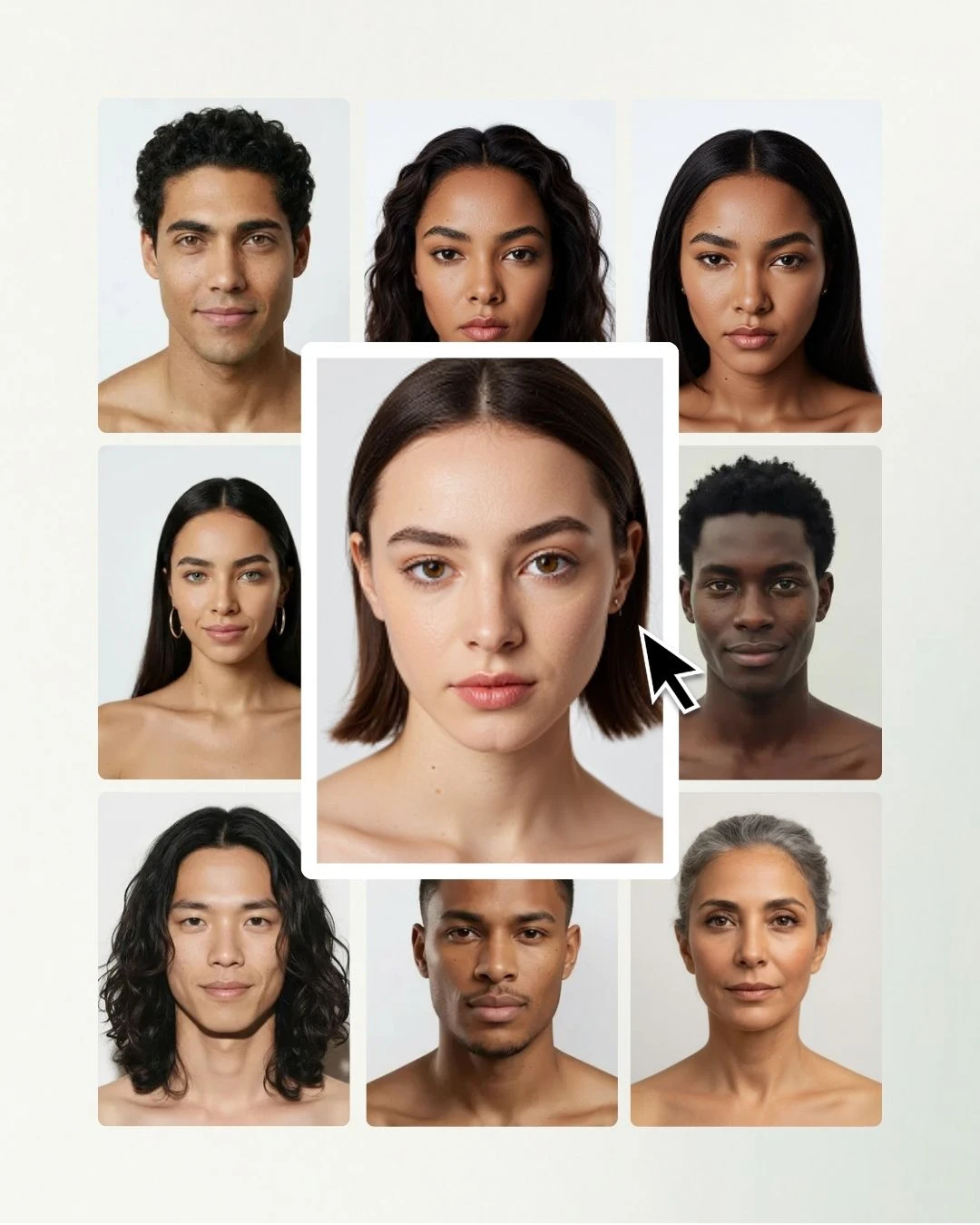
This technology makes it easy to generate visuals featuring a wide range of diverse characteristics, allowing for full customization of eye color, skin tone, hair texture, body type, height, and gender.
These model galleries are integrated into the entire digital shooting process. Brands simply select the look they want to capture, choose their AI-generated child or baby model, and then generate the entire shoot.
This creates a complete scene without the need for physical sets, crews, or human models. It allows for dynamic, high-end rendering to showcase your clothing collection.
Ultimately, instead of involving real infants or children, brands leverage generative AI to create hyper-realistic on model visuals.
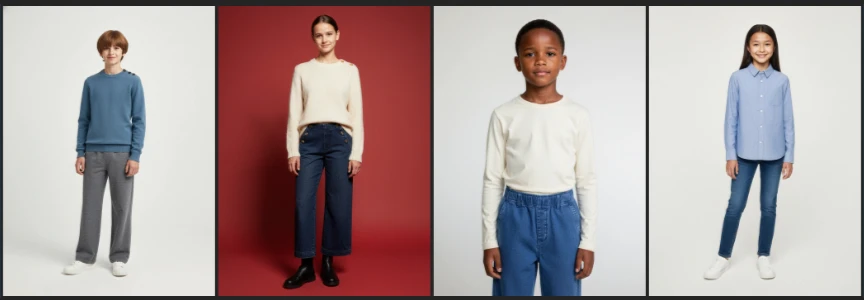
AI generated kids by Veeton.
2) AI Photoshoot platform for Kids & Babies shoots
Here is a brief overview of how to create your photoshoot using AI-generated child models.
Acting as a virtual studio, the platform covers every requirement of a traditional shoot. The process is organized into four key stages:
Step | Action | Description |
|---|---|---|
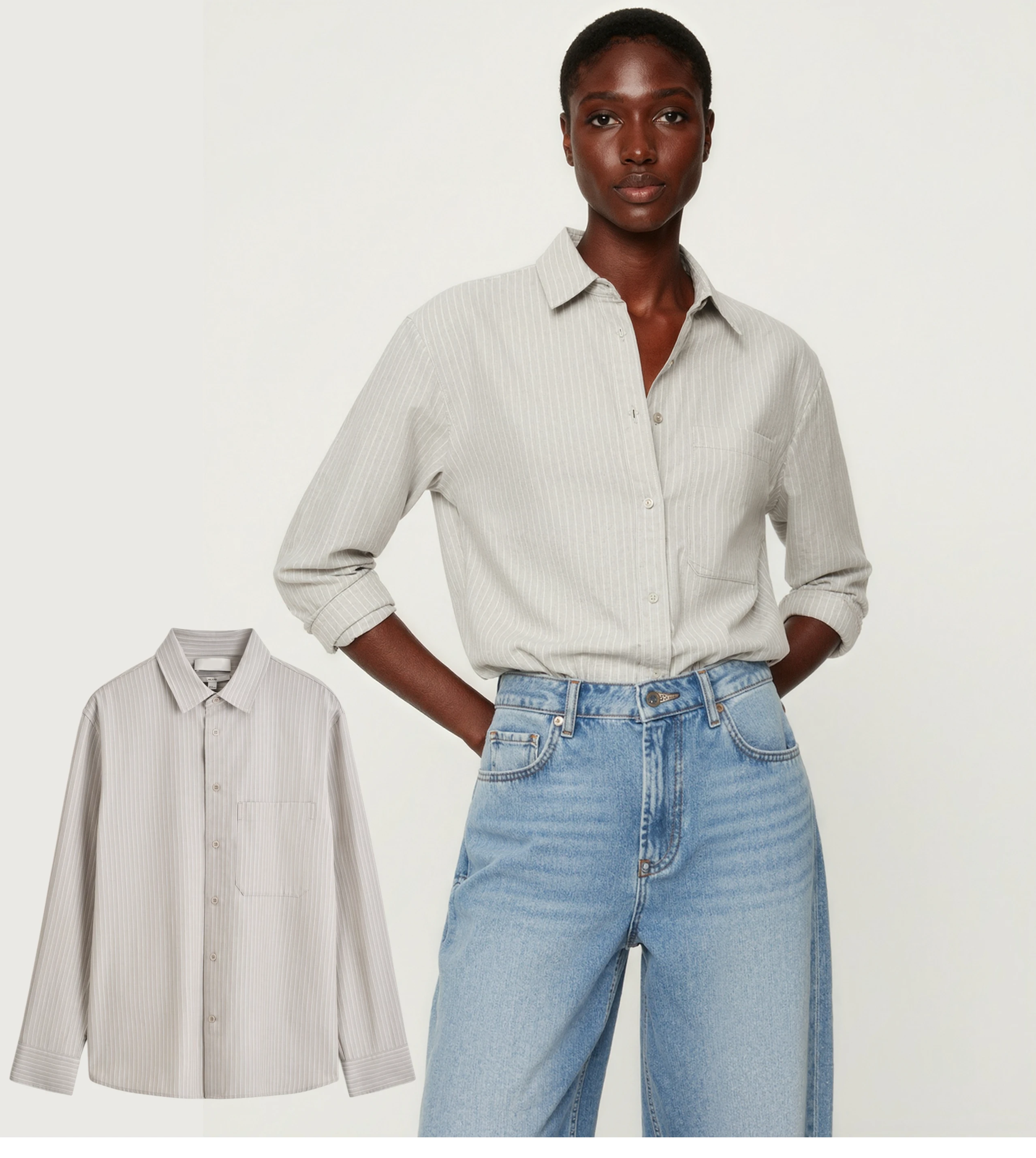
1. Import | Upload Product Photo | Import a high-quality photo of the garment (flatlay or ghost mannequin). |
2. Customize | Select Model & Styling | Choose an AI-generated baby or kid model. You can pair the product with complementary items to create a full outfit. |
3. Configure | Set Pose & Scene | Select the desired background (e.g., a soft-lit nursery or outdoor park) and specific poses. |
4. Generate | Instant Rendering | Click to produce professional, high-fidelity images in hours rather than weeks, slashing costs by over 95%. |
In short: Upload your product, choose your AI model, set your preferences, and let the AI work its magic!
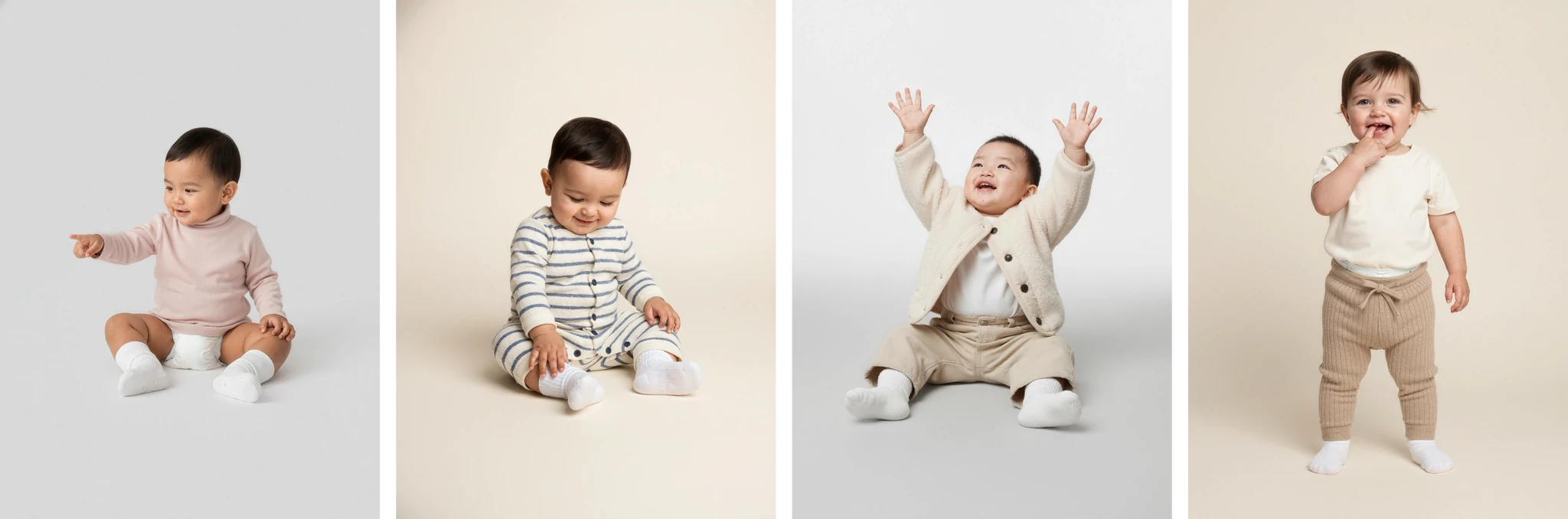
Benefits of AI for Kids & Babies in fashion
1) The New Standard: Kids & Babies AI photoshoots
AI transforms production by removing the human and legal complexities of traditional child modeling:
- Eliminating Labor Constraints: Say goodbye to the logistical hurdles of working with minors. You no longer need to manage schooling schedules, "child wranglers," or the unpredictable moods of infants. Production happens on your terms, 24/7, without involving a single real child.
- Total Image Rights Protection: Using AI-generated models eliminates the legal headache of image rights and costly contract renewals. Since the models don't exist in real life, you gain full, permanent ownership of your visuals with zero risk of privacy violations.
- Infinite Diversity & Customization: Create your own brand identity from scratch. Instantly generate babies and children of any ethnicity, age, or body type to match your specific aesthetic or localized global markets, all without the nightmare of international casting calls.
Beyond simply accelerating the production process, the creative freedom offered by AI-generated child models allows brands to experiment with a vast array of visuals and identify what truly resonates with their audience. This represents a massive marketing opportunity with the potential to significantly boost overall revenue.
2) Democratization of AI Photoshoots for kids & babies
The most significant impact of AI is the democratization of high-end production. Historically, professional photoshoots for infants and children were reserved for major global retailers due to the substantial capital and lengthy lead times required. AI has effectively removed these financial and logistical barriers, making premium visual storytelling accessible to brands of all sizes.
This shift is a fundamental business transformation. As a result, the children's fashion sector is rapidly adopting AI to maintain competitiveness and scale without the traditional overhead.
Use case: how brands use AI generated Kids & Babies
1) Market Adoption: Leading the Transition to AI
The shift toward AI-generated imagery is no longer theoretical; it is already the operational standard for industry leaders. Notable brands have already integrated AI into their creative workflows to showcase their collections with unprecedented agility.
By using these advanced digital solutions, these heritage brands can maintain their high aesthetic standards while bypassing the logistical complexities of traditional infant photography.
2) How Sweetpea & Boy uses Veeton AI Photoshoot for Kids
Sweetpea and Boy is a Pacific Northwest-inspired brand that captures Seattle’s adventurous spirit through high-quality apparel. Their Kids section brings this "Seattle-cool" aesthetic to the smallest explorers, offering ultra-soft onesies and durable basics designed for both comfort and style.
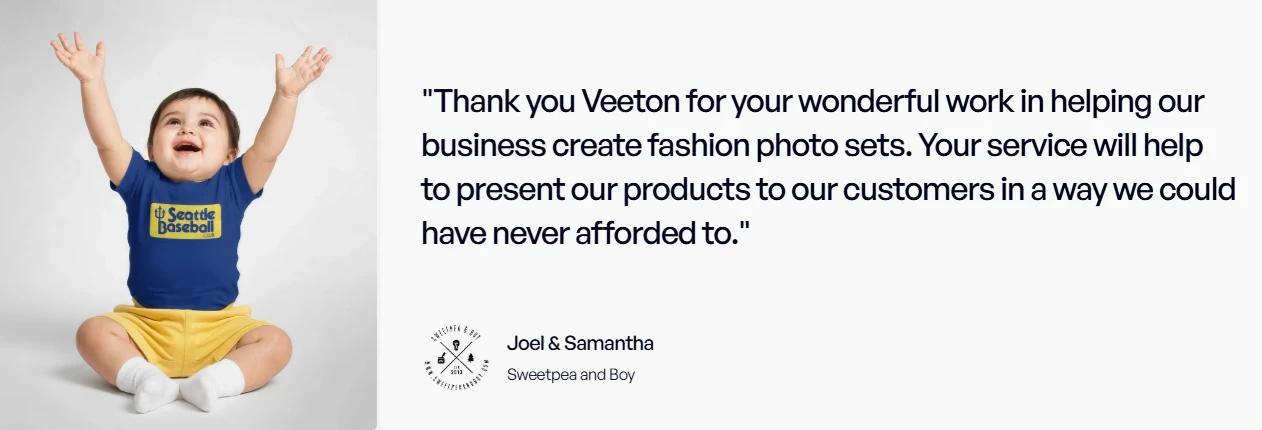
To showcase these collections, Sweetpea and Boy collaborates with Veeton to generate photorealistic baby models. By using Veeton’s AI technology, the brand can produce high-quality on-model imagery without the logistical complexity of traditional infant shoots. They are highly satisfied with the collaboration, as it allows them to maintain their authentic brand identity while scaling their digital catalog with ease.
Happy to see that they particularly appreciated our service!
“I came across Veeton when I was in search of a service to create online children models for our online apparel store. Could not find many options. But Veeton checked all of the boxes for our needs. The ease at creating photo sets and the variety of models and posing options are a significant positive and the final products have been exceptional. I hope to be a long standing customer.”
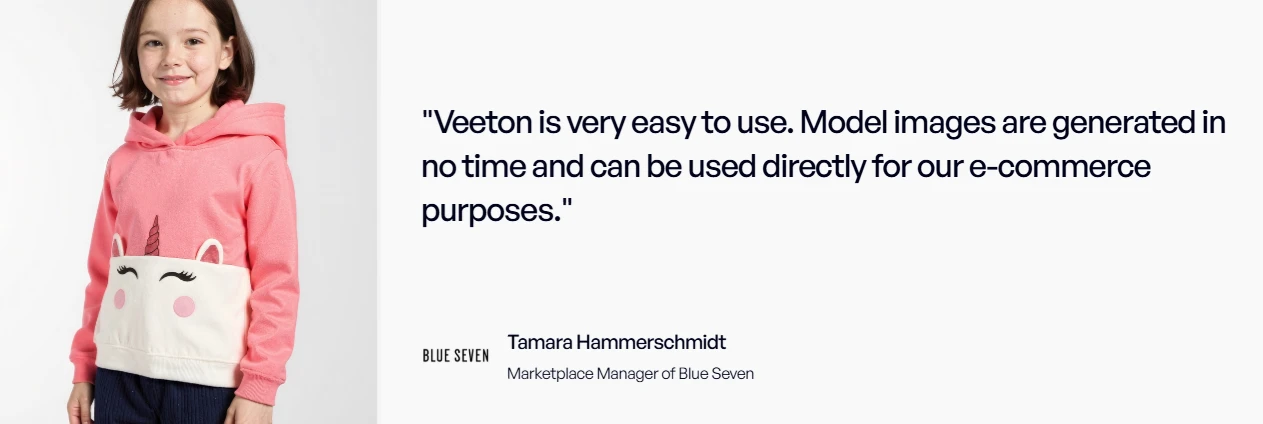
3) How Blue Seven uses Veeton AI Photoshoot to boost Zalando Performance
Blue Seven is revolutionizing its digital presence by partnering with Veeton to transform its Kids collection. By moving away from traditional flatlay photography (clothes laid flat), the brand now uses AI to generate photorealistic child models.
This shift has been a game-changer on Zalando, where Blue Seven now stands out with dynamic, lifelike imagery. The results are clear: replacing static shots with "on-model" visuals has significantly increased their conversion rates.
By bypassing the logistical hurdles of traditional shoots, Blue Seven scales its visual content with speed and precision, proving that AI-driven imagery is the future of e-commerce performance.