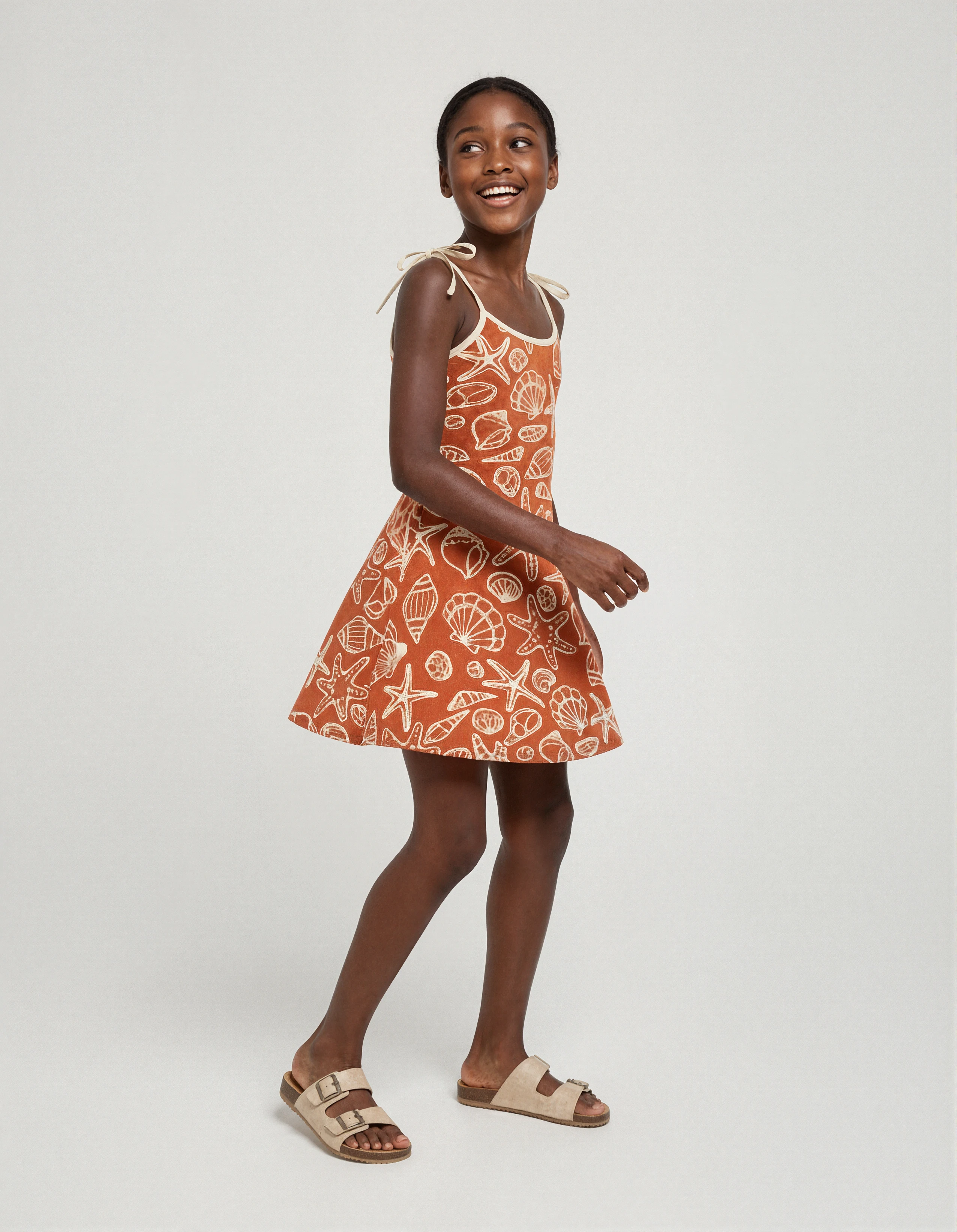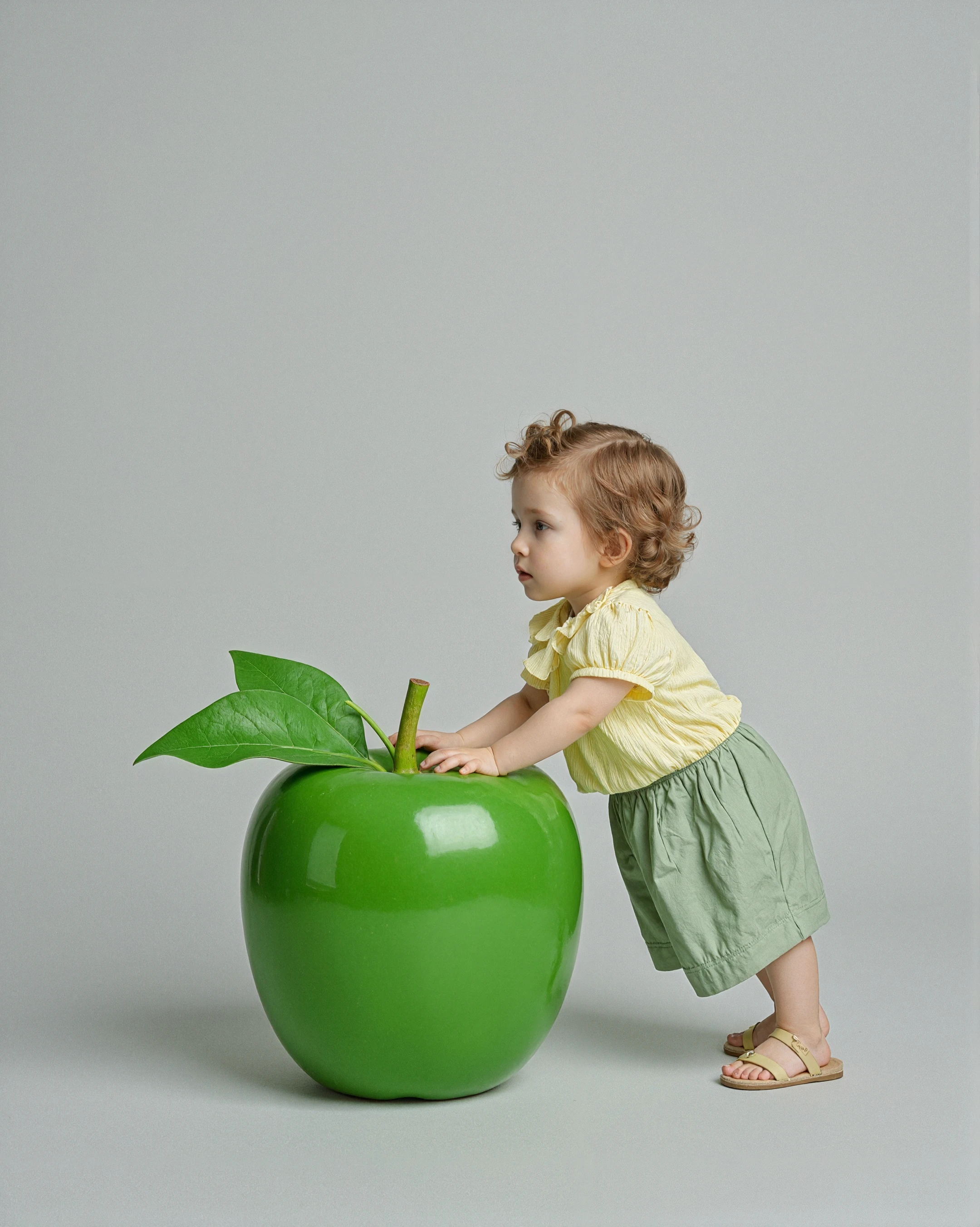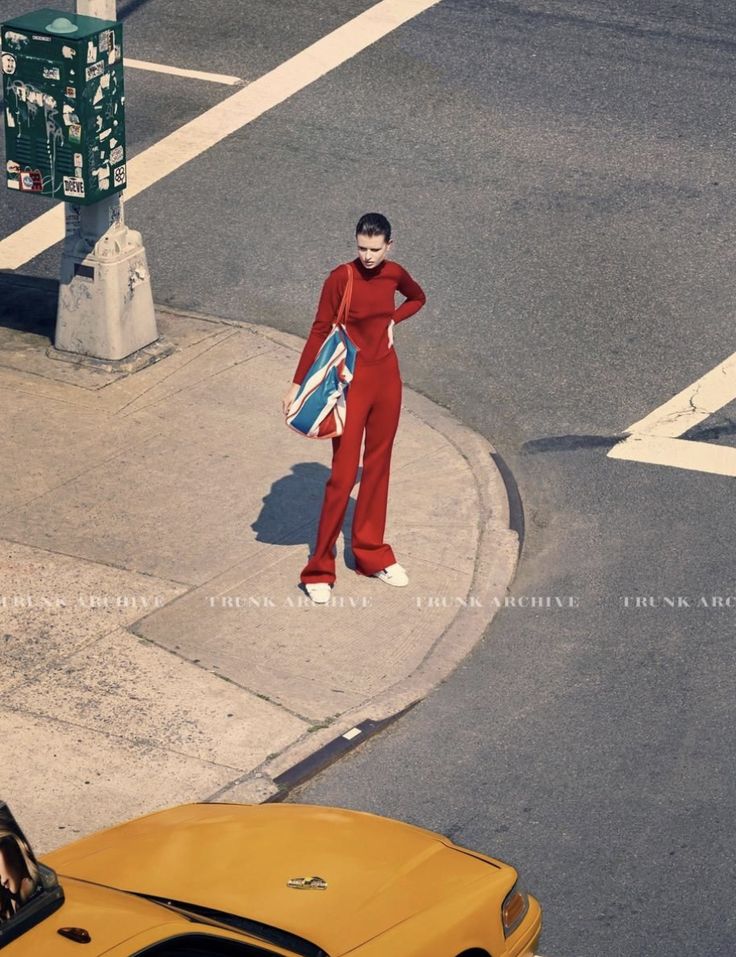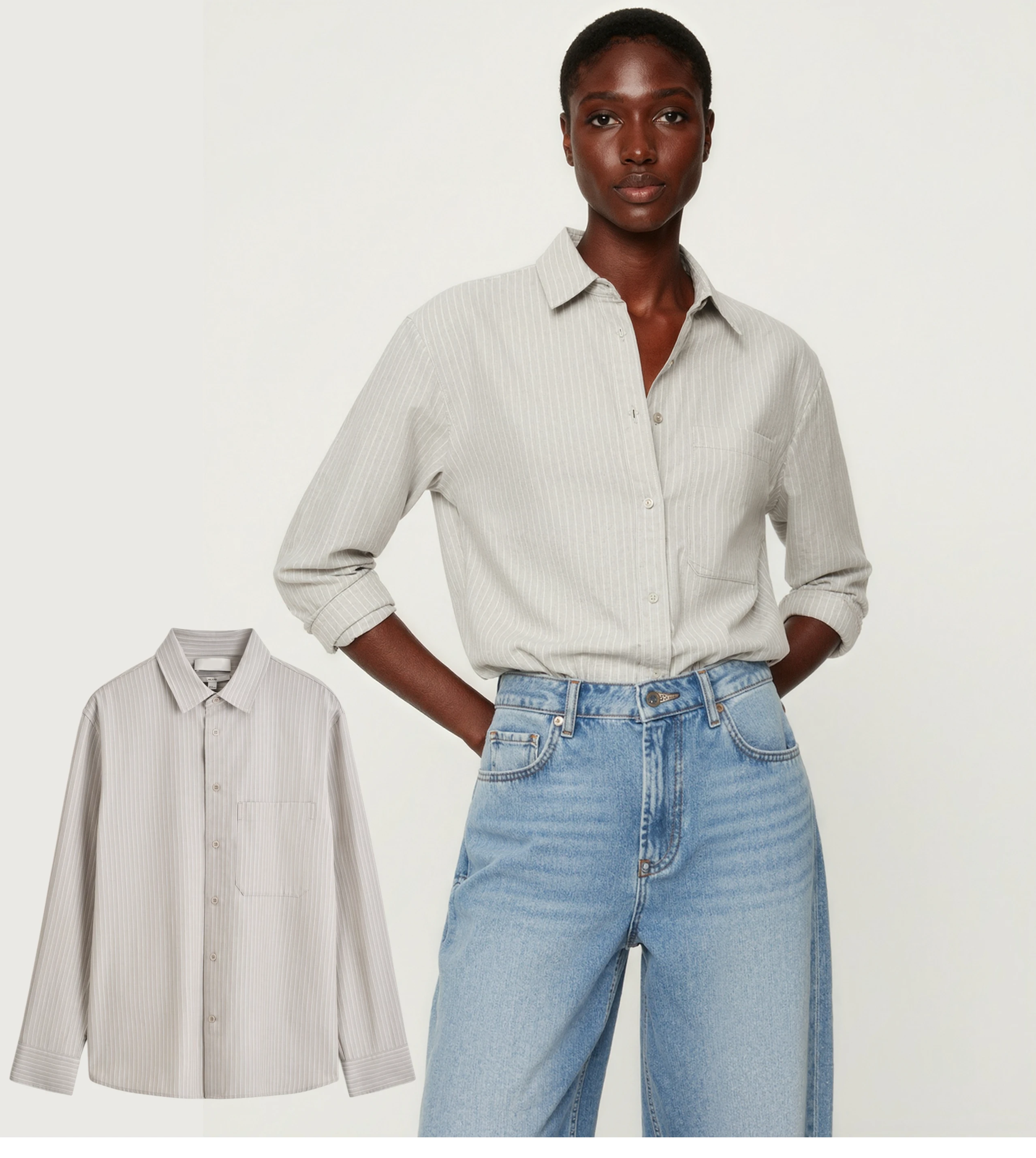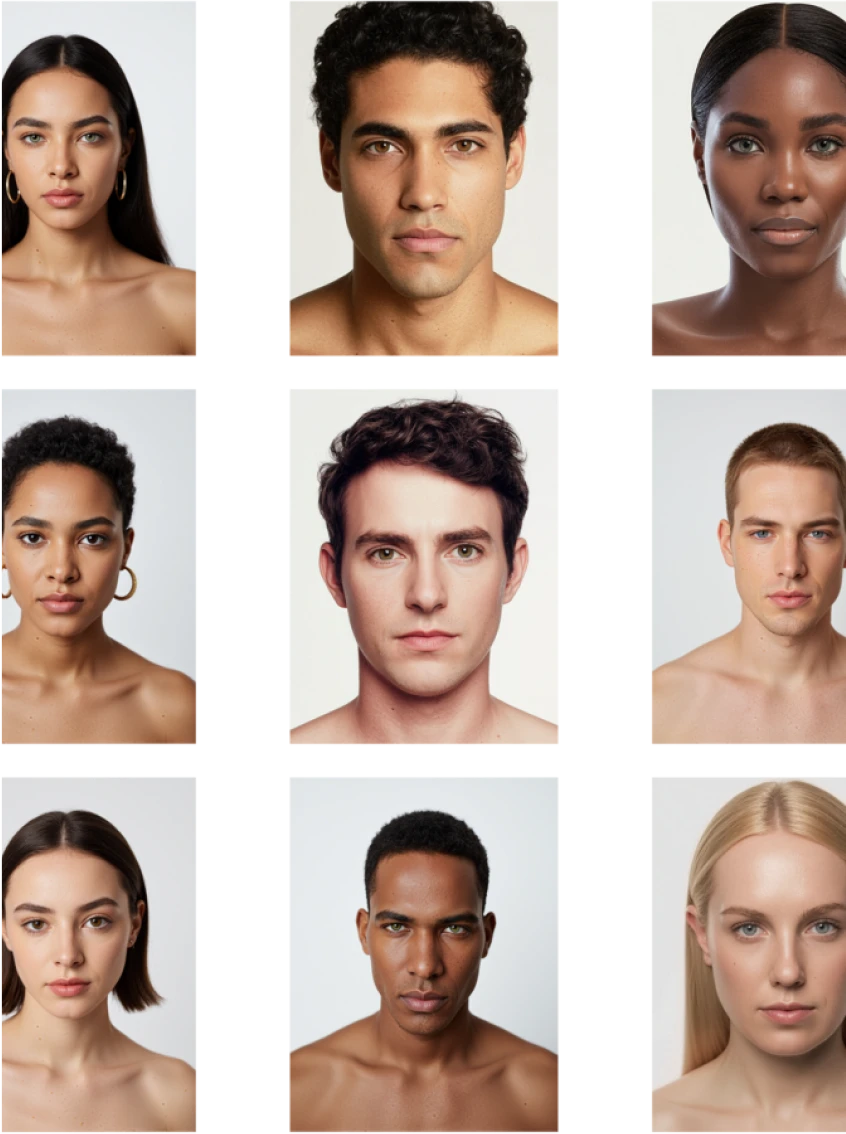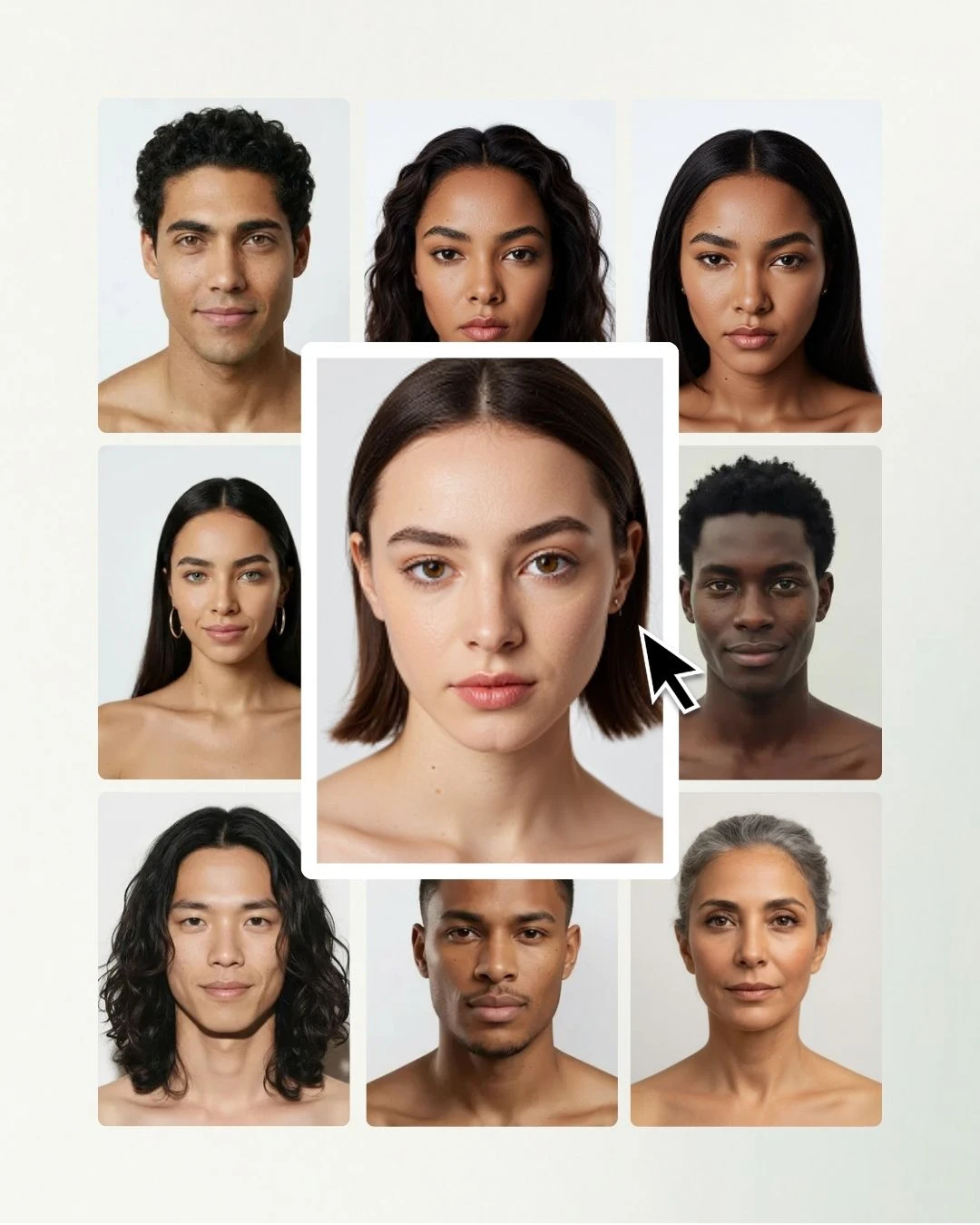
AI fashion models are photorealistic, computer-generated people created with AI to wear your garments in product images, with no casting, model booking, or studio shoot. For apparel and ecommerce brands, an AI-generated fashion model turns a single garment photo into on-model visuals in minutes, at a fraction of a traditional shoot's cost.
This is the complete guide: what AI fashion models are, how to generate them, which brands already use them, how they compare to hiring, how realistic they get, the diversity and ethics questions, what they cost, and how to choose a generator.
What are AI fashion models?
Brands use the term "AI models" for two different things:
- Digital twins are an AI replica of a real, contracted model, used to scale that person's likeness across shoots. H&M's program is the headline example, and the models are paid for each use.
- Fully AI-generated models are virtual people created from scratch with generative AI, based on no real individual.
Both are made with generative AI, but fully generated models give brands the most freedom: no schedule, no per-shoot fee, no image rights to renew. Either way the output is the same, high-end on-model imagery for product pages and campaigns. The one thing a good model never sacrifices is garment fidelity, your actual product, with its logos, seams, and drape, has to stay accurate on the generated body.
Digital twins vs fully AI-generated models: which should you use?
The two approaches suit different goals:
- A digital twin preserves a specific real model's likeness, useful when a brand has an established face it wants to scale across shoots. It requires the model's consent and ongoing payment, and is governed by likeness law.
- A fully AI-generated model is created from scratch, so there is no person to schedule, pay per use, or license, and no consent to manage. It gives the widest range of looks on demand.
For most ecommerce catalogs, fully generated models win on cost, speed, and flexibility. Digital twins make sense when a recognizable human is already part of the brand and you have the budget and agreements to support them. The rest of this guide assumes fully generated models, the route most brands take.
How to create AI fashion models
Generating an AI fashion model does not involve casting or booking anyone. With an AI fashion studio like Veeton, an AI fashion model generator works in three steps:
- Upload a garment photo, as a flat-lay, on a hanger, or ghost-mannequin.
- Pick or generate the model. Choose one from a library, or generate a custom face by setting age, body type, skin tone, hair, and overall look.
- Export on-model images in minutes, and reuse the same model across a collection for one consistent brand face, or run a whole catalog in batch.
The choice between a library model and a custom model is the main decision, and the custom route (covered just below) is where the real brand value sits. See the AI fashion models tool for the full workflow.
How AI fashion models actually work
Two technologies combine. A generative model trained on fashion imagery produces a photorealistic person and scene. A garment-preservation layer, the same virtual try-on technology behind on-model generation, maps your real product onto that person without distorting it. The quality of any AI fashion model is essentially how well a tool balances the two: a flawless face wearing a garment that no longer matches your product is a failure, and so is an accurate garment on an uncanny body. Fashion-trained tools beat general image generators precisely because they are tuned for that balance, plus the anatomy details, hands, posture, and proportion, that give a weak model away.
How to create a custom, on-brand AI model
Picking a library model is fine to start, but the higher-value move is generating a custom model that becomes your brand's own face. You define the look once, age, body type, skin tone, hair, and expression, and the studio locks it as a reusable identity. From then on, every drop is shot on the same recognizable model, the way a brand once retained a signature human, except this one is exclusive, never ages out of a contract, and can be generated in any pose or setting on demand. For brands building a visual identity, an owned custom model is the difference between generic on-model shots and a house look a shopper starts to recognize.
Which brands use AI fashion models?
The early adopters are now household names, and that is the clearest signal this is past the experimental stage:
- H&M is creating 30 "digital twins" of its real models in 2025, with the models retaining rights and being paid per use.
- Levi's announced back in 2023 that it would use AI-generated models to supplement human ones.
- Mango ran an entire youth campaign built with AI.
- Guess placed AI-generated models, named Vivienne and Anastasia, in US Vogue.
Beyond the headline names, DTC brands, marketplaces, and high-volume sellers use AI fashion models to keep catalogs consistent and launch faster. The common question now is not whether to use them, but how to do it well and disclose it honestly.
Why AI fashion models are taking off
Adoption is not a fad; it tracks a fast-growing market. The AI-fashion sector was worth roughly $2.89 billion in 2025 and is growing about 40% a year, as the tooling crossed from novelty to production-grade. Three forces drive it: cost (a generated image runs cents to about a dollar, versus thousands for a shoot), speed (a flat-lay becomes an on-model shot in seconds instead of weeks), and quality now good enough that standard garments are hard to tell from a real photoshoot. For an industry where margin and speed-to-trend decide the season, that combination is exactly why the early adopters moved first and everyone else is catching up.
AI fashion models vs hiring a model
Both produce on-model imagery. The trade-offs:
AI fashion models | Hiring a model + photographer | |
|---|---|---|
Casting | any look, generated on demand | limited to who you can book |
Cost | flat subscription, cents to a few dollars per image | model fees + photographer + studio per shoot |
Turnaround | minutes | days to weeks |
Usage rights | commercial license across channels | time-limited, renegotiated |
Diversity | any age, body type, skin tone instantly | whoever you cast and afford |
Best for | ecommerce, catalog, ad variations | high-end editorial, a specific human |
For most product and campaign imagery, generated models cover the need. Many brands keep a traditional model shoot only for flagship editorial where a specific person is the point.
AI fashion models by product type
The generator adapts to what you sell:
- Apparel: the core use, showing fit across sizes (XS to plus) on a consistent face.
- Kids and baby: a high-value category of its own, covered in the dedicated section below.
- Accessories: shoes, bags, hats, and eyewear shown worn, where fit and scale drive the sale.
Strong on-model imagery is what lifts product pages; for the conversion mechanics, see how on-model imagery boosts ecommerce conversion.
AI fashion models for kids and baby fashion
Childrenswear is where AI fashion models earn their keep fastest. A traditional kids' or baby shoot is uniquely hard: casting child models, coordinating guardians, short attention spans, strict consent and child-labor rules, and reshoots when a toddler will not cooperate. AI fashion models remove all of it. You can generate child and baby models across ages, from newborn to teen, in a diverse range of looks, dress them in your collection, and export on-model images in minutes, with no child on set.
For kidswear and baby brands, and for marketplaces selling them, that means a full, professional, diverse catalog without the logistics or the legal exposure of shooting real children. It is one of the highest-value uses of AI fashion models in practice. See AI for kids' fashion and AI for babies' fashion for how brands are doing it.
How realistic are AI fashion models?
The leading tools are now ultrarealistic and studio-quality, built for product pages, lookbooks, and ads. Realism comes from three things: model rendering (natural faces, hands, and poses), garment fidelity (your product preserved, not reinvented), and an upscaling pass for sharp, ecommerce-ready files. The usable-image rate on the best fashion-specific tools now sits around 90%, up from roughly 25% two years ago, so a small share of generations still needs a second pass, usually on intricate details. Getting multiple poses and angles right is also where a fashion-trained generator beats a general image tool; see the fashion model posing guide for what good on-model framing looks like.
The biggest lever on realism, though, is your input. A clean, evenly lit garment shot on a plain background gives the generator the most accurate product to work from, and generating a few variations and picking the strongest beats settling for the first result. Treat it like directing a shoot: better source material in, better model images out.
Building a consistent cast at scale
A single model is a demo; a catalog needs a consistent cast. Two capabilities make that work. Model persistence lets you reuse the exact same generated face and body across hundreds of SKUs, so a collection looks like one shoot, not forty. Batch generation then applies that locked cast, framing, and background across the whole catalog in one pass. This is what lets a brand like Monoprix hold art-direction consistency across an entire range, and it is the difference between a fun experiment and a production pipeline. When you evaluate a generator, persistence and batch matter as much as the realism of a single image.
What AI fashion models still struggle with
Even the best tools have edges to plan around. Sheer fabrics, intricate embroidery, and small text logos are where rendering most often slips, and a human review or quick retouch earns its keep. Hands and complex poses can still betray a weak generation, so check at full zoom before publishing. And the part AI genuinely cannot fake is the specific presence of a known human model, or the in-person art direction of a high-fashion shoot. None of this undermines the catalog use case, where AI models are production-ready today; it just sets the line. Use AI for scale and consistency, and keep a human in the loop for the intricate and the iconic.
AI fashion models for diversity and inclusion
AI models make inclusive representation practical. Casting a real range of ages, body types, and skin tones is expensive and slow with traditional shoots, so most catalogs stay narrow. With AI fashion models you can show one product on a genuinely diverse set of people at no extra production cost, across every channel. That is both an ethics point and a commercial one, shoppers engage and convert more when they see themselves represented. More on this in how generative AI enables diversity and inclusion in fashion.
Are AI fashion models free?
You can start for free. Veeton gives you 10 credits and a free trial with no card required, so you can generate real on-model images before paying. Paid plans add higher volumes and batch processing for full catalogs, and every plan includes a commercial license, so the visuals are yours across ecommerce, ads, and social.
What AI fashion models cost, and the ROI
Beyond the free tier, AI fashion models are priced per image or by subscription. A generated image typically runs $0.10 to $1, against $5,000 to $15,000 for a traditional photoshoot day. The gap compounds at catalog scale: for a brand shooting 200 products, AI generation commonly cuts photography spend by 90 to 95%, and turns a multi-week production into a few hours. Even at a few dollars per image with revisions, the per-SKU cost lands far below the $20 to $150 a studio shoot runs. The ROI is rarely the close call; the bigger win is the speed and the freed budget brands reinvest in product and acquisition.
How to choose an AI fashion model generator
Not every tool is built for fashion. When you compare options, and shoppers do compare ("which AI fashion models are best", "top companies offering AI fashion models"), weigh:
- Garment fidelity: does it preserve logos, fabric, and fit? Test this first.
- Model library and customization: a real range of ages, body types, and skin tones, plus custom and kids/baby models.
- Batch mode: can it process a full collection, not one image at a time?
- Output quality: ultrarealistic, high-resolution, multiple angles.
- Fashion focus: built for apparel, not a general image generator.
- Commercial license and price: confirm you own the output for ads and storefronts.
For the wider market, see our best Botika alternatives and the 20 best AI photoshoot tools, and model selection as a market strategy for choosing the right model per audience.
Ethics, disclosure, and consent
A serious look at AI fashion models has to address the questions brands and regulators are asking:
- Consent for likeness. Using a real model's digital twin now carries legal obligations, such as New York's Fashion Workers Act, in force from June 2025, which requires explicit consent. Fully AI-generated models, based on no real person, sidestep this, which is one reason most brands choose them.
- Accuracy. The model can be virtual, but the garment must be real. Slimming a fit or hiding a flaw is both a returns problem and a trust problem.
- Disclosure. When Guess ran AI models in Vogue, the debate was about labeling. Norms are still forming, but transparency with shoppers is the safer long-term posture.
Handled well, AI fashion models improve representation rather than fake it, showing one product across a genuinely diverse cast a single shoot could not afford.
Are AI fashion models replacing human models?
This is the question the industry is wrestling with, and the honest answer is "partly, not entirely." AI models are absorbing the high-volume, repetitive catalog work, the on-model shots for hundreds of SKUs, that was never glamorous and rarely paid top rates. High-end editorial, campaign storytelling, and signature or celebrity work stay human, because they trade on a specific person and presence AI does not replace. Most brands now run a hybrid: AI for the catalog, real models and photographers for the hero campaign. The shift is real, which is exactly why consent frameworks and honest disclosure matter, but "replacement" oversimplifies what is closer to a redistribution of where human talent is worth paying for.
What results brands see
Better on-model imagery drives measurable commerce: high-quality on-model visuals lift conversion by up to 33% versus low-quality images, and accurate imagery can cut returns by as much as 22% by setting correct expectations. Brands that digitize and refresh faster also see 30 to 50% higher full-price sell-through (McKinsey, State of Fashion 2025). Veeton worked with Flamboyante Paris to bring inclusive luxury to life with diverse AI fashion models that a traditional shoot could not have justified.
Beyond the product page: AI fashion models in marketing
On-model product shots are the entry point, but brands increasingly use AI fashion models across all of their marketing. A consistent, owned AI model can become a brand face, a recurring persona across the site, email, and social, the role a contracted human ambassador once filled, without the contract or the scheduling. Some brands run AI personas as virtual influencers, posting styled looks and campaign imagery. Others use the same generated cast to spin up ad-creative variations for paid-social testing, or seasonal lookbook and campaign visuals on demand. The thread is leverage: generate the model once, then reuse that identity everywhere a human face used to be booked.
Where AI fashion models are heading
The technology is moving in a few directions worth planning for. Personalization: imagery rendered to match a shopper's own size or market, rather than one model for everyone. Motion: the same models animated into AI fashion videos for product pages and social. Real-time generation: on-model images produced the moment a product is added, so the photoshoot becomes an invisible background step. The brands building an owned, consistent AI cast now will have a head start as these mature.
Key AI fashion model terms
- AI fashion model: a photorealistic, computer-generated person who wears your garments in product images.
- Digital twin: an AI replica of a specific real model, used with that person's consent.
- Fully AI-generated model: a virtual person created from scratch, based on no real individual.
- Custom model: an exclusive generated model that becomes a brand's recurring face.
- Garment fidelity: how accurately the tool preserves your real product on the model.
- Batch generation: producing on-model images for many products in one pass.
- Upscaling: an AI pass that raises resolution to ecommerce-ready quality.
Who AI fashion models are for, and how to start
They fit apparel and fashion ecommerce above all: DTC brands, marketplaces, and labels with frequent drops or large catalogs, across clothing, shoes, bags, eyewear, and kids' and baby ranges. The bigger the catalog, the more a casting-and-shoot workflow is the bottleneck, and the more AI fashion models pay off.
You can start free: Veeton gives you 10 credits and a free trial with no card required. Upload one garment and generate your first on-model images in minutes.
---